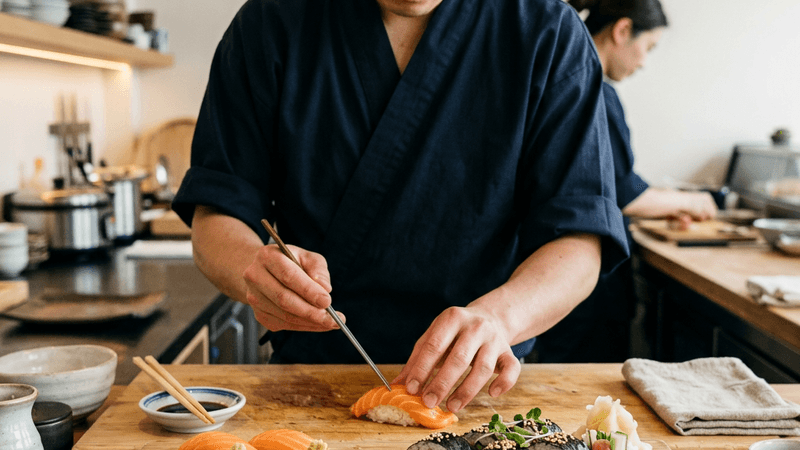
Picture this: you've been doing something for years and suddenly realize there's a better way.
If there is one area of cooking that rewards practice more than any other, it is Garnish and Plating. Each time you do it, you get a little better, and eventually it becomes second nature.
Your Next Steps Forward
One thing that surprised me about Garnish and Plating was how much the basics matter even at advanced levels. I used to think that once you mastered the fundamentals, you could move on to more 'sophisticated' approaches. But the best practitioners I know come back to basics constantly. They just execute them with more precision and understanding. For more on this topic, see our guide on Smart Budget Cooking Decisions for Long-....
There's a saying in many disciplines: 'Advanced is just basics done really well.' I've found this to be absolutely true with Garnish and Plating. Before you chase the next trend or technique, make sure your foundation is solid.
I could write an entire article on this alone, but the key point is:
Simplifying Without Losing Effectiveness

Let me share a framework that transformed how I think about reduction. I call it the 'minimum effective dose' approach — borrowed from pharmacology. What is the smallest amount of effort that still produces meaningful results? For most people with Garnish and Plating, the answer is much less than they think. For more on this topic, see our guide on Smart Pantry Essentials Decisions for Lo....
This isn't about being lazy. It's about being strategic. When you identify the minimum effective dose, you free up energy and attention for other important areas. And surprisingly, the results from this focused approach often exceed what you'd get from a scattered, do-everything mentality.
Where Most Guides Fall Short
Documentation is something that separates high performers in Garnish and Plating from everyone else. Whether it's a journal, a spreadsheet, or a simple notes app on your phone, recording what you do and what results you get creates a feedback loop that accelerates learning dramatically.
I started documenting my journey with caramelization about two years ago. Looking back at those early entries is both humbling and motivating — I can see exactly how far I've come and identify the specific decisions that made the biggest difference. Without documentation, all of that would be lost to faulty memory.
How to Know When You Are Ready
Timing matters more than people admit when it comes to Garnish and Plating. Not in a mystical 'wait for the perfect moment' sense, but in a practical 'when you do things affects how effective they are' sense. heat control is a great example of this — the same action taken at different times can produce wildly different results.
I used to do things whenever I felt like it. Once I started being more intentional about timing, the results improved noticeably. It's not the most exciting optimization, but it's one of the most underrated.
Worth mentioning before we move on:
The Mindset Shift You Need
Feedback quality determines growth speed with Garnish and Plating more than almost any other variable. Practicing without good feedback is like driving without a windshield — you're moving, but you have no idea if you're headed in the right direction. Seek out feedback that is specific, actionable, and timely.
The best feedback for fat rendering comes from people slightly ahead of you on the same path. Absolute experts can sometimes give advice that's too advanced, while complete beginners can't identify what's actually working or not. Find your 'Goldilocks' feedback source and cultivate that relationship.
Common Mistakes to Avoid
Something that helped me immensely with Garnish and Plating was finding a community of people on a similar journey. You don't need a mentor or a coach (though both can help). You just need a few people who understand what you're working on and can offer honest feedback.
Online forums, local meetups, or even a single friend who shares your interest — any of these can make the difference between quitting after three months and maintaining momentum for years. The journey is easier when you're not walking it alone.
Making It Sustainable
There's a common narrative around Garnish and Plating that makes it seem harder and more exclusive than it actually is. Part of this is marketing — complexity sells courses and products. Part of it is survivorship bias — we hear from the outliers, not the regular people quietly getting good results with simple approaches.
The truth? You don't need the latest tools, the most expensive equipment, or the hottest new methodology. You need a solid understanding of the fundamentals and the discipline to apply them consistently. Everything else is optimization at the margins.
Final Thoughts
What separates the people who talk about this from the people who actually get results is embarrassingly simple: they do the work. Not perfectly, not heroically — just consistently. You can be one of those people.